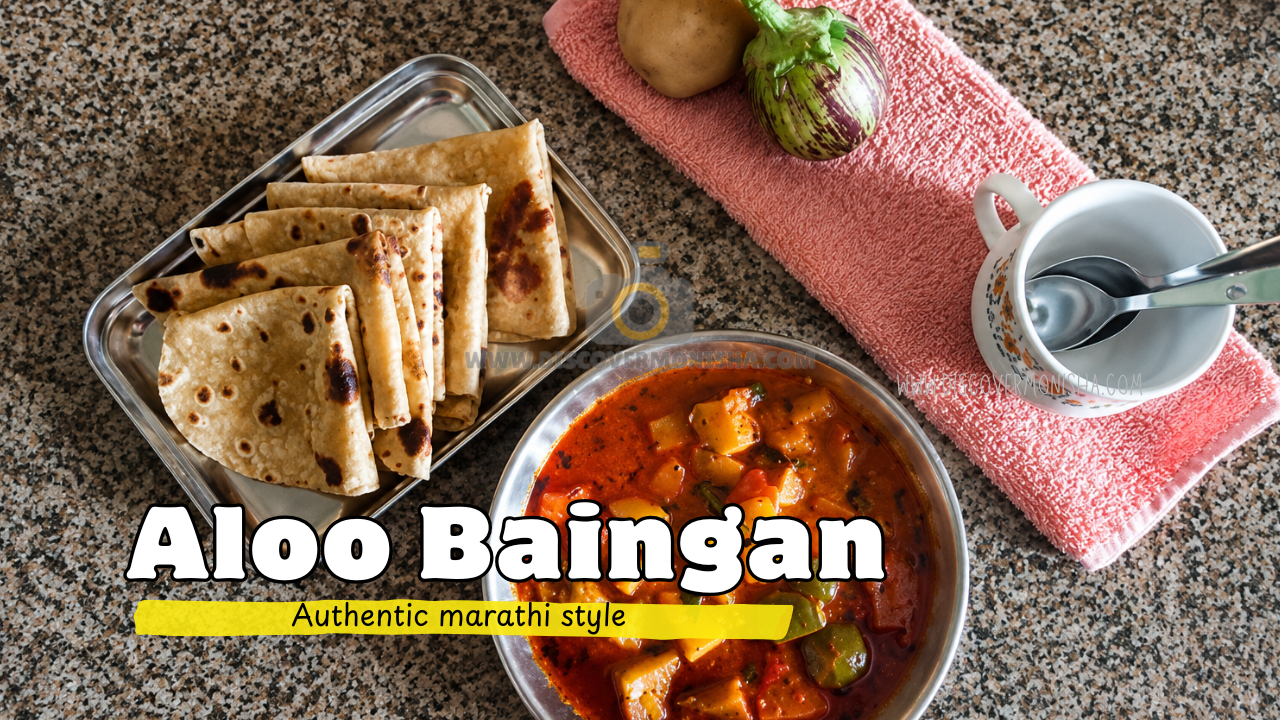
Ingredients
-
5 tbsp oil
-
1 medium onion
-
2 small Tomato
-
1 tspn ginger garlic paste
-
2 medium Brinjal
-
2 medium potato
-
3/4 tspn red chilli powder
-
1 & 1/2 tspn kashmiri chilli powder
-
1/4 tspn turmeric powder
-
1/2 tspn coriander powder
-
saltas per taste
-
a couple of pinches sugar
-
l/4 tspn garam masala
-
coriander leaves
Directions

Easy Brinjal & Potato Curry (Indian Eggplant and Potato Curry)
This is one of those childhood recipes I grew up eating at my parents’ home, and it continues to be one of my all-time favourites.
A Little About Brinjal
Brinjal, also known as eggplant or aubergine, is often called the “King of Vegetables”. If you look closely, the green calyx on top resembles a tiny crown—perhaps that’s where the name comes from.
Beyond its appearance, brinjal is a wonderfully nutritious vegetable. It is rich in dietary fibre, potassium, magnesium, and antioxidants, making it a healthy addition to everyday meals.
In South Indian homes, brinjal is a staple ingredient and appears in countless dishes, including the following:
- Sambar
- Brinjal Kuzhambu (tamarind-based curry)
- Brinjal Poriyal (stir-fry)
- Brinjal Thokku (spiced relish)
- Fried brinjal
- Sun-dried brinjal fryums (Vathal)
One of the things I love most about brinjal is how beautifully it absorbs spices while developing a unique flavour in every style of cooking.
Before You Begin
This curry is meant to have a light, slightly watery consistency rather than a thick gravy.
You might wonder why—but there’s a delicious reason, which I’ll share at the end of this recipe!
For a family of four, you’ll need:
- 2 medium brinjals (eggplants)
- 2 medium potatoes
- 1 medium onion
- 2 small tomatoes
- 1 teaspoon ginger-garlic paste
Maintaining the right balance of vegetables is important, as it helps achieve the authentic flavour of this curry.
I also recommend using slightly more oil than you normally would, as it enhances both the texture and taste.
Method
Heat oil in a pan.
Add:
- Mustard seeds
- Cumin seeds
- Curry leaves
Once they begin to splutter, add the sliced onions and sauté until golden brown. Don’t rush this step—it creates the base flavour for the curry.
Next, add the ginger-garlic paste and cook until the raw smell completely disappears.
Now add the potatoes first. Allowing them to cook slightly before the other vegetables helps them develop a lovely texture.
Add the chopped brinjals and tomatoes together, as they cook in roughly the same amount of time.
Now add:
- Turmeric powder
- Red chilli powder
- Kashmiri chilli powder
- Coriander powder
- Salt
- A small pinch of sugar to balance the acidity of the tomatoes
Pour in enough water to achieve a light curry consistency.
Bring everything to a gentle boil and cook until the vegetables are tender without becoming mushy.
Finally, sprinkle garam masala over the curry just before switching off the heat. Simmer for another minute before garnishing with freshly chopped coriander leaves.
Serve hot with chapati or roti.
My Favourite Way to Eat It
Here’s a little trick that has been part of my family for years.
Instead of eating the brinjal whole, gently squeeze the soft flesh out of its skin directly onto your plate.
Mix that creamy brinjal with a piece of potato and wrap it inside a warm roti.
That silky, melt-in-the-mouth combination creates a naturally rich texture that makes every bite incredibly satisfying.
Sometimes it’s these little traditions that turn a simple meal into a memorable one.