Ingredients
-
8-10 Colocasia leavesWell washed, cleaned, stems discarded
-
1 cup Chickpea flour (Besan)
-
4 tspn Kashmiri chilli powder
-
3/4 tspn Turmeric powder
-
3 tspn Coriander leaves
-
1 tspn Jeera powder
-
3/4 tspn Asafoetida
-
1 tspn Ginger garlic green chilli paste
-
Few Coriander leaves chopped
-
As per taste Salt
-
Water
-
Oil
-
Sesame seeds
Directions

Introduction
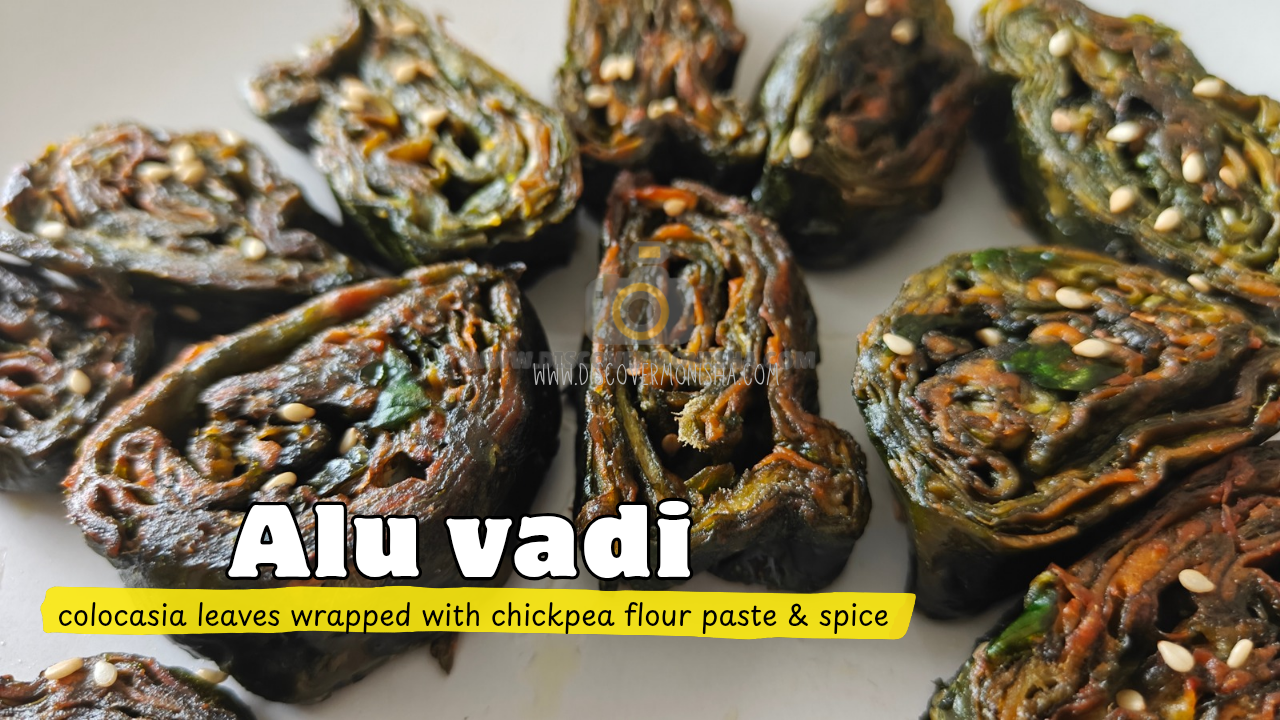
Alu Vadi is a traditional Maharashtrian snack made with nutritious colocasia leaves, also known as taro leaves. These leafy greens add fibre and several micronutrients to the diet, while besan provides plant-based protein. What makes this dish special is how a simple leaf is transformed into a flavourful, steamed and pan-fried snack with aromatic spices, tamarind and sesame seeds.
One little thing to know about colocasia leaves: you may sometimes experience a slight itchy or prickly sensation in the throat after eating them. This is due to naturally occurring calcium oxalate crystals in the leaves, which is why proper cooking is important. Well-cooked colocasia leaves are traditionally enjoyed in many Indian cuisines.
So don’t let that little quirk stop you from trying this beautiful Maharashtrian delicacy. When prepared and cooked properly, Alu Vadi is a delicious way to turn humble greens into something truly special.
Preparation
Prepare the leaves: Wash the colocasia leaves thoroughly and wipe them completely dry. Trim the thick stems and veins if needed so the leaves are easier to roll.
Prepare the besan mixture: In a bowl, add besan, salt, turmeric powder, Kashmiri chilli powder, coriander powder, cumin powder and asafoetida.
Add the ginger-garlic-green chilli paste, tamarind extract and finely chopped coriander leaves. Add water little by little and make a thick, smooth, spreadable paste. The mixture should be thick enough to coat the leaves without running off.
Layer the leaves: Place one colocasia leaf with the veined side facing upwards. Spread a thin, even layer of the besan mixture over the entire leaf.
Place another leaf over it and repeat the process. Continue layering the leaves with the besan mixture.
Roll: Fold the sides inward and roll the layered leaves tightly from one end to the other to form a firm log.
Steam: Place the rolled log in a steamer and steam for a minimum of 30 minutes if the leaves are big or until the besan layer is completely cooked and firm. Allow it to cool completely before slicing.
Slice: Once cooled, cut the roll into evenly sized pieces.
Pan-fry: Heat a little oil in a pan and arrange the sliced alu vadi pieces. Sprinkle sesame seeds over them and fry on medium heat until the outside becomes golden and slightly crisp.
Flip gently and cook the other side until evenly browned and crisp.
Serve: Serve warm as a snack with green chutney, tamarind chutney, or simply enjoy it as it is.
Tip
Make sure the besan paste is thick and spreadable rather than watery. A thick coating helps the layers hold together beautifully while steaming and gives the alu vadi a better texture when pan-fried.
Ways we consume this in our home:-.
- With rasam rice as a side dish.
- As a snack for evening
- For travelling time in train or flight or car. (Steam and refrigerate a night before and fry on pan next day)