Ingredients
-
1/4 inch Ginger(Freshly grounded)
-
3 large Garlic
-
1 large Onion
-
1 tspn Lemon
-
1/2 tspn Turmeric powder
-
3/4 tspn Kashmiri chilli powder
-
1/2 tspn Coriander powder
-
1/8 tspn (half of 1/4) Jeera powder
-
As req. Salt
-
1/2 tspn oil
-
few tspn if required water
-
1/2 tspn Corn starch
-
1/2 tspn Rice flour
Directions

Introduction
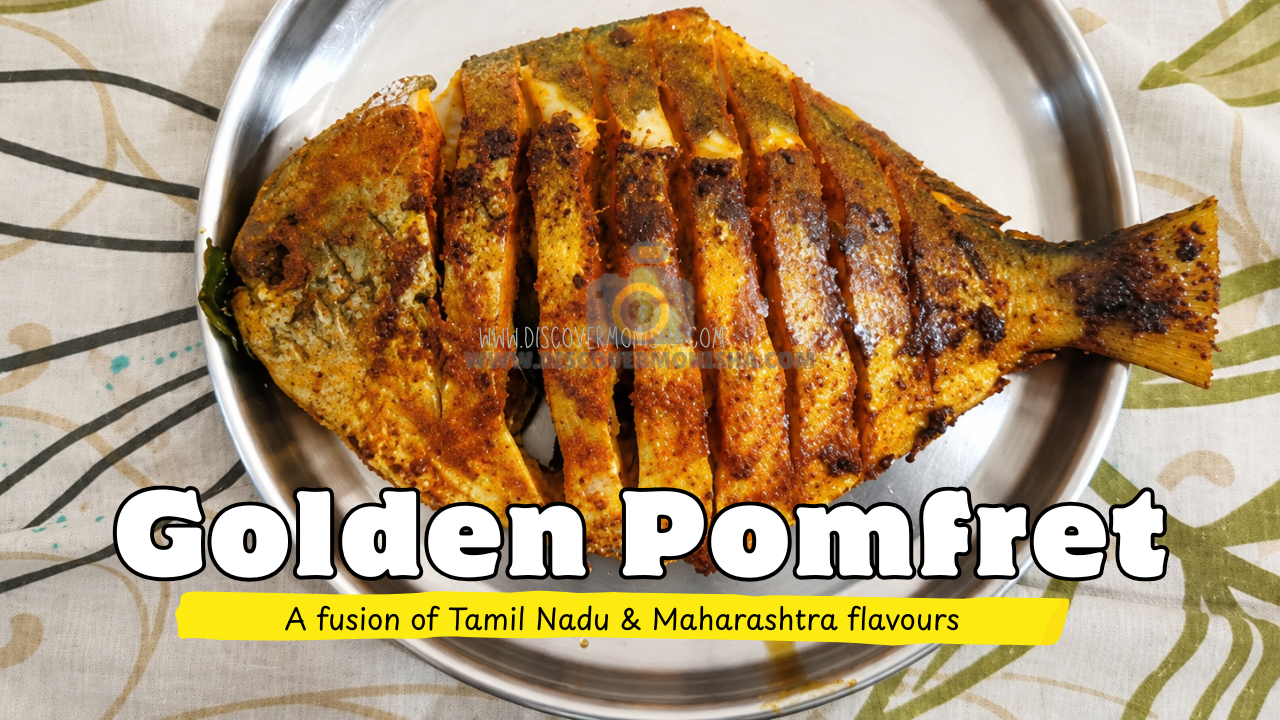
Pomfret, also locally called a “paplet” in Maharashtra and parts of India, is a fish that most of them cherish to have. It is basically a 5-star fish when it comes to taste and structure. The bones of the fish run throughout the center, hence making it very easy for people to consume.
Pomfret is usually deep-fried or grill-roasted due to its moist nature. It has a “non-fishy” flavour.
It feels light after having this fish, yet a small-sized pomfret can easily fill your appetite and soul.
Growing up between Tamil and Maharashtrian food influences, I have always enjoyed how both cuisines bring their own unique character to seafood preparations. Tamil-style fish fry often focuses on bold chilli flavors, fresh ginger-garlic paste, curry leaves, and simple homemade spices, while Maharashtrian fish recipes make excellent use of coastal flavors, balanced heat, and the natural taste of the fish itself.
This golden pomfret fry is inspired by both these culinary traditions. The marinade combines familiar South Indian spices with the straightforward, flavor-forward approach commonly seen in Maharashtrian coastal cooking. The result is a pomfret fry that is spicy and aromatic and crispy on the outside yet moist and juicy on the inside.
What I love most about this recipe is that it does not overpower the delicate flavor of the pomfret. Instead, it enhances the fish while bringing together the best of Tamil and Marathi home-style cooking in one simple and delicious dish.
Without further explanation, let’s head on to the very basic recipe. There are many varieties to make this fish, but the best of all observed in my village side is what I am going to share with you.
The best taste can be achieved with
Fish fry tastes heavenly when the spices are hand-grounded in a stone pestle and cooked in earthenware in an open fire. Later serve it over a banana leaf, completing the main course with sambar, rice and this fish fry. Words will not justify the feeling of having such a soulful dish.
Method of preparation
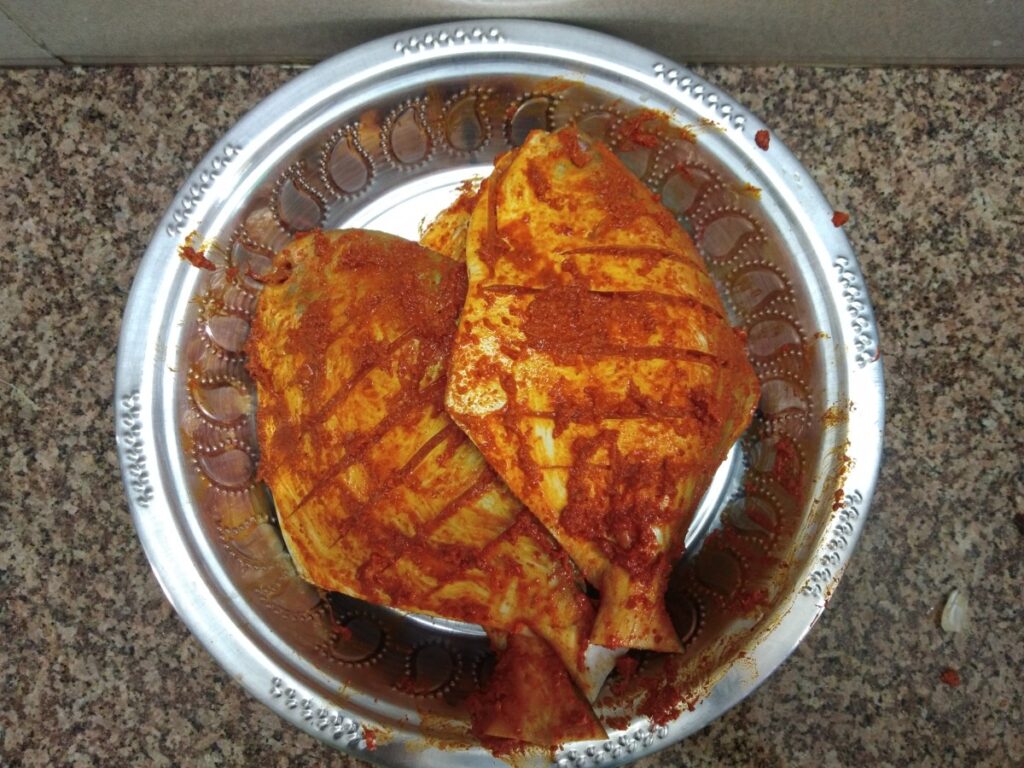
- Always wash the fish as many times as you can. Make smaller incisions on the fish on both sides. so the masala can be spread inside properly. And take a wide plate.
- Add the spices like turmeric powder, Kashmiri red chilli powder, coriander powder, salt, preferably fresh onion-ginger-garlic paste, lime juice and oil.
- Mix well with your hand for 2-3 minutes. After bringing all the spices together, add corn flour to it. Mix well again. The moment you have added the flour, do not delay and quickly add it over the fish and set it to fry.
- Reason being, once the flour goes in, the flour will tend to absorb all the spices and start making the masala a bit tighter. For this reason, we can add a few drops of water but not much. since the ginger garlic paste itself will be a wet mixture in it.
- Few prefer to let the fish sit with marination for some time, but I personally feel that pomfret can be set to fry immediately once the masala is applied.
- In a wide, shallow frying pan. Add the desired amount of oil. Add a few curry leaves. It should not take more than 5-7 mins on each side over a low flame. Do not let the fish turn too crispy or brown otherwise the juicy and moist flavors of the fish will be lost.
- Transfer over to a paper towel and serve hot.
That’s all about a very simple pomfret fry that will require 4 ingredients that are already available in your kitchen. The same masala can be used for a few other Indian fish that you wish to fry.
Store-bought fish fry masala:
- There are also alot of fish fry masalas available in the market these days. They give you that extra spicy flavour. But the fish made with fresh spices always wins the heart.
- The benefit of keeping the spices simple is that you will be able to taste the actual flavour of fish. Every fish carries its own unique flavour. But choosing the right spices and methods of preparation is very important.