Ingredients
-
For Filling
-
1 small carrotfinely chopped
-
Few beansfinely chopped
-
7 - 8 piece mushroomfinely chopped
-
1 small capsicumfinely chopped
-
1/4 th of whole Green cabbagefinely chopped
-
1/2 cup Spring onionfinely chopped
-
Spring onion leaves
-
1 tspn ginger
-
1 tspn garlic
-
2 tbsp oil
-
1 tspn soy sauce
-
1.4 tspn vinegar
-
As required salt
-
1/2 tspn White pepper powder
-
For momos dough
-
2 cups All purpose flour (Maida)
-
As required salt
-
2 tbsp oil
-
As required water
-
For Schezwan Sauce
-
15 - 20 Kashmiri whole dried chilli
-
2 tbsp Tomato ketchup
-
5 - 6 pieces (Half sliced) onion
-
3/4 tspn ginger
-
1/2 tspn garlic
-
1 tspn soy sauce
-
1/4 tspn Rice wine vinegar
-
as per taste salt
-
As required water
Directions

All momos are dim sum.
But not all the dim sum are momos.
“Momos” is a Tibetan term, and “dim sum” is a Chinese term used for this steamed savory filling.
That is because the filling is the same for both and the dough differs. Generally we use all-purpose flour for momos and potato starch or rice starch or sometimes even wheat starch for the wrap.
This may look difficult but is very easy. You can either use any small handy momo-maker mold or make it with your hands as easily as you can. Let us see what the vegetables commonly used for veggie dumplings are. I personally love veggie momos more than non-veggie momos. It tastes much better with a lot of variety of flavors released by the vegetables.
There are a variety of dumplings, out of which the Tibetan version is most of the Indian’s favourite. We can make momos with mixed vegetables, minced chicken, minced prawns, finely chopped paneer or corn cheese momos.
For making dough:
- Take all-purpose flour, salt and oil in a mixing bowl.
- Add water little by little and knead the dough until it is a bit firm and tight as you would normally knead for pooris.
- Do not overknead, as the gluten may start to activate. Cover it with a damp cloth and set it aside.
For making the filling:
- finely chop all the vegetables namely, cabbage, carrot, capsicum, french beans and mushrooms. You can optionally add paneer, as it acts as a great binding agent. Cook all the vegetables and mix the paneer only right before setting the momo to steam.
- Finely chop ginger and garlic
- Finely chop the spring onions and set the greens aside.
- In a frying pan, heat oil and add the onions, followed by ginger and garlic. You can also skip onion if need be. I add it because it adds a caramelization taste.
- Add all the finely chopped veggies and sauté on a medium-high flame. Do not overcook or undercook.
- Because we are going to steam it, the fillings will further tend to cook.
- Add salt, white pepper powder, green chilli chutney, Soy sauce and just a dash of vinegar. Mix well
- Add the greens of spring onion once you have turned off the flame.
- Do not cover the filling while cooked or after you have finished cooking.
For making the dumplings:
- Take a lemon-sized amount of dough, roll it well and flatten it thin.
- Add a spoonful of mixture in the center, and with your fingertip, just slightly spread water on the edge of the dough.
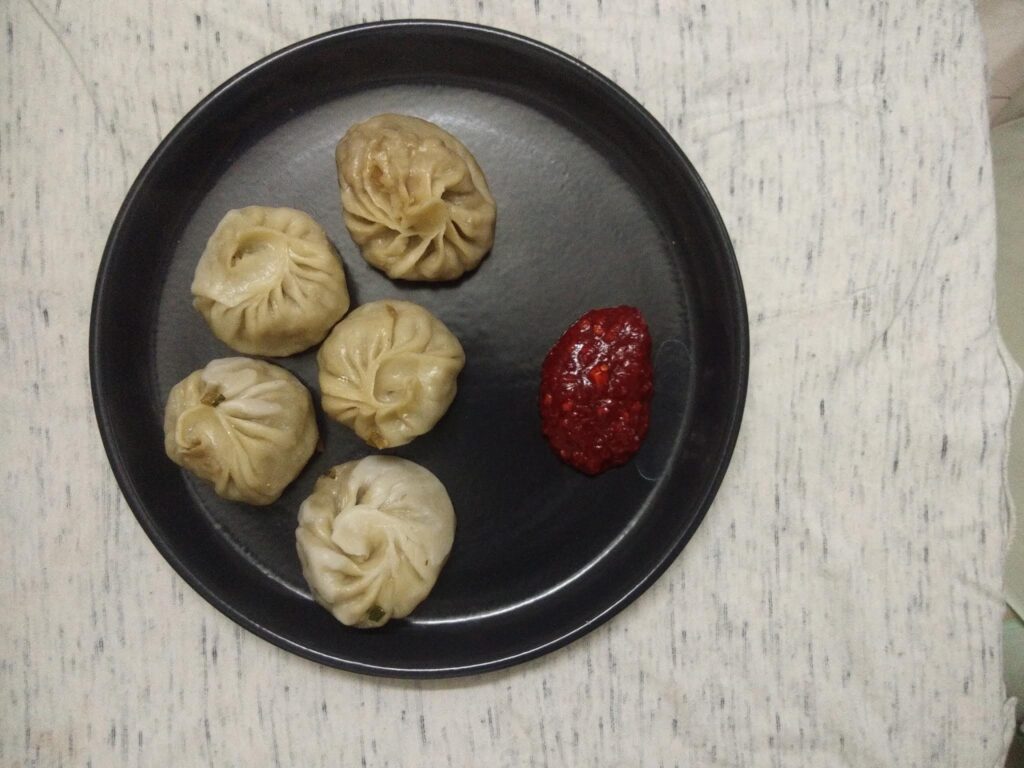
- Now start pleating the dough inwards, bringing all the dough towards the center, and if need be just pinch and remove the excess dough from the top.
- Another easy method is to turn over towards its sides, which may lead to a semicircular shape.
- There is no hard and fast rule for the shape of homemade momos. So just relax and take your own time to figure out the shape that you are comfortable achieving.
- At the end anyway if the ingredients and right taste are there, your momos will still taste the same.
For steaming the dumplings or momos:
- You can use any vessel that acts as a steamer. A bamboo steamer or a pressure cooker (without the whistle) or an idli steamer. This is very easy for me, being a South Indian.
- So in a steamer plate, start placing the momos with a half-inch distance.
- As they start to steam, they will expand a little bit.
- In order to check the status of the momos, pinch the dough a bit, and if they don’t stick to your fingers, then they are cooked.
- Also, the momos will turn translucent, not completely, but from a white color to translucent.
- This should take around 8 – 10 minutes under a slow flame.
- Because we add water into the steamer, it is always better to cook over a slow flame; otherwise, there can be chances of water splashing over the dumplings.
- Note: These dumplings can be deep-fried in hot oil. The entire process is the same until the steaming procedure.
For making momos’ Schezwan sauce:
Remove the seeds from the dried red chilies and soak them in hot water for about 20 minutes.
Meanwhile, roughly chop the tomatoes, ginger, and garlic.
Transfer the soaked chillies, tomatoes, ginger, and garlic to a blender jar. Add a little water and grind into a smooth paste.
Heat oil in a pan and add the prepared paste. Cook over a low flame for 8–10 minutes, stirring occasionally.
Add vinegar, soy sauce, salt, and sugar if using. Continue cooking until the sauce thickens slightly and the raw smell disappears.
Allow the sauce to cool completely before serving.
Store the sauce in a clean airtight glass jar in the refrigerator for up to one week
For non-veg dumplings, finely mince the chicken and substitute the vegetables with finely minced chicken.
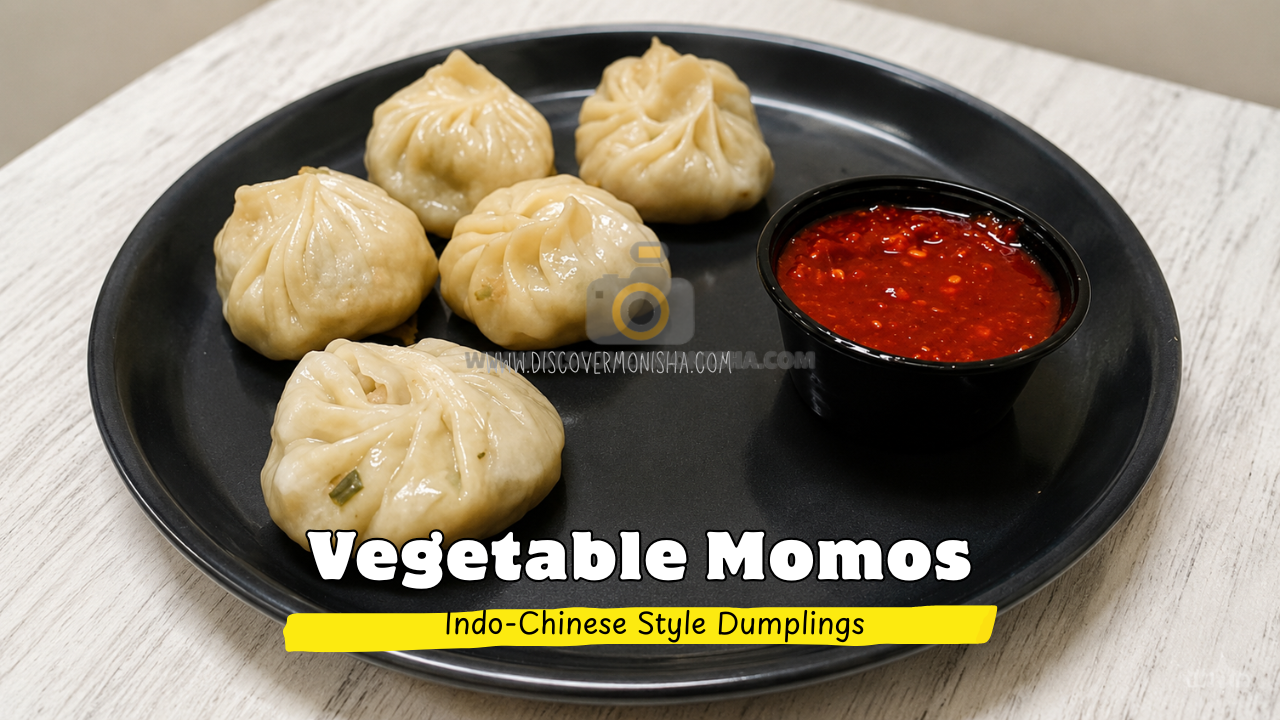
Serve the momos with the Schezwan sauce, or you can have them without sauce as well.
Tastes very fresh and very Chinese.