NIOS vs SCHOOL | A tough choice for homeschoolers | Part 6
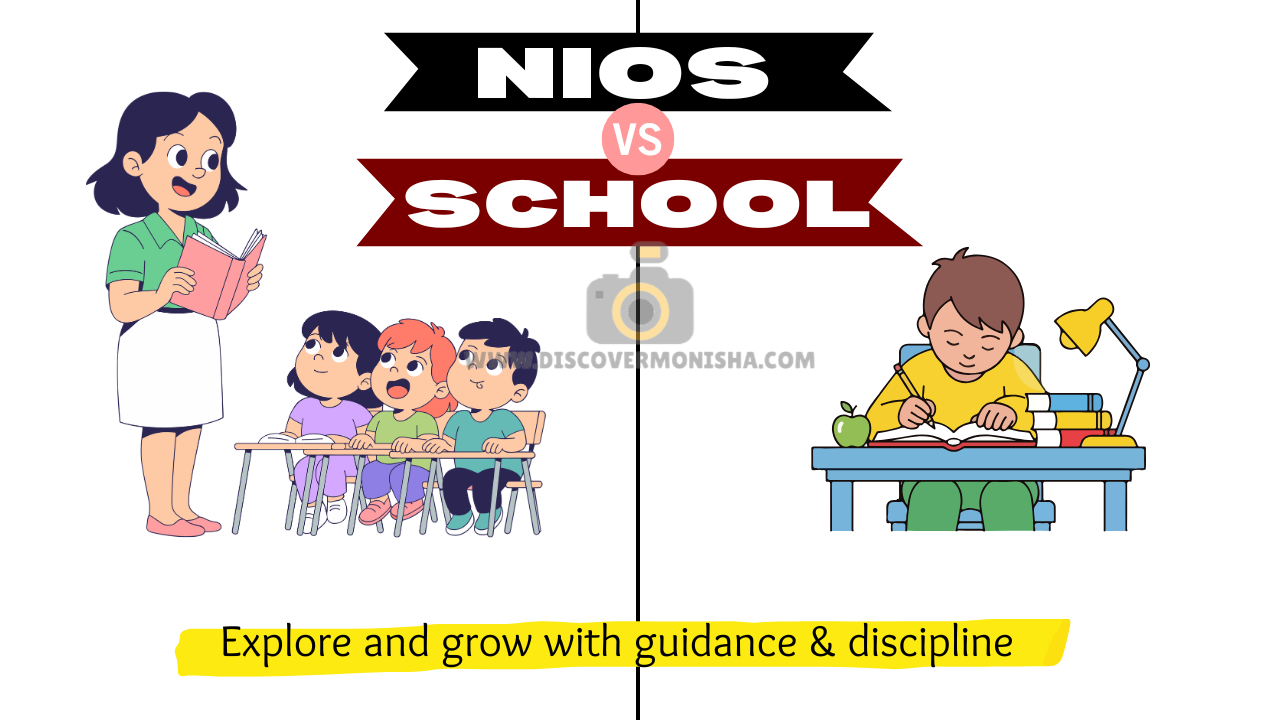
NIOS vs. SCHOOL
In this article you will find: –
- How to Choose Between NIOS and Traditional Schooling
- A Guide to NIOS vs. School for Homeschoolers
- Steps to Decide: NIOS or School for Your Child
- How to Evaluate NIOS and School Options for Homeschooling
- Navigating NIOS and School Choices: A Practical Guide
- Key Differences Between NIOS and Traditional Schools
- Reasons to Consider NIOS for Homeschooling
- Factors to Weigh in NIOS vs. School Decision
Myths About NIOS and Schooling Debunked:
1. What are the advantages and disadvantages of NIOS vs. school?
2. How Does NIOS Compare to Traditional Schooling?
3. What Should Parents Consider When Choosing NIOS or School?
4. How Do NIOS and Schooling Impact a Child’s Future?
A tough choice for homeschoolers—choose which?
Choosing the right education path for a child is never an easy decision, especially for parents who are exploring homeschooling options. At some point, many families find themselves standing between two choices—NIOS and traditional schooling. Both systems have their own advantages and limitations, and what works for one child may not necessarily work for another.
As parents, our responsibility is not only to think about academic performance but also about the overall well-being, learning pace, and personality of the child. Understanding both options carefully can help us make a more confident and thoughtful decision.
So, here let’s see what the actual challenges faced in homeschooling are and how to combat them:
1. How to Choose Between NIOS and Traditional Schooling
Choosing between NIOS and a traditional school requires understanding your child’s learning style, flexibility needs, and long-term academic goals. While schools offer structured environments, NIOS provides greater flexibility for children who thrive outside conventional classrooms.
2. A Guide to NIOS vs. School for Homeschoolers
For homeschooling families, deciding between NIOS and regular schooling can feel overwhelming. This guide helps parents understand how both systems function and which one might align better with their child’s learning journey.
3. Steps to Decide: NIOS or School for Your Child
Every child is different, and selecting the right education path requires thoughtful evaluation. By considering factors such as learning pace, social exposure, academic pressure, and future opportunities, parents can make a more balanced decision. Taking help from tutors all over the world to get coaching for things they enjoy or are interested in can be one of the best decisions they make. Another thing to focus on is creating subjects and chapters based on individual needs, which reduces stress from unnecessary pressures.
4. How to Evaluate NIOS and School Options for Homeschooling
Before choosing an education system, it is important to evaluate how each option supports the child’s growth. Parents must look at flexibility, curriculum structure, examination patterns, and the child’s comfort with independent learning. There are various publications available across the country, and you can select worksheets or books based on your child’s needs or interests. Teaching children from home can be a daunting task, so patience & a diligent mind are essential throughout this journey.
5. Navigating NIOS and School Choices: A Practical Guide
Understanding the differences between NIOS and traditional schooling can make the decision-making process easier for parents. With the right information, families can choose a path that supports both learning and personal development. After doing quite a bit of research, I realized that NIOS may not be the right fit for my daughter either. The limited availability of learning centers and the fact that many of them function more like coaching centers made me feel that they may not offer the kind of learning environment we are looking for. NIOS also follows levels such as A, B, C and D, which need to be completed through examinations before progressing towards the Class 10 examinations.
NIOS also requires timely registration for the level-wise examinations. Missing the registration window at any stage could affect the timeline for progressing towards the Class 10 examinations, which was another factor I had to consider while deciding whether it would be the right path for my daughter.
Since I had already decided to follow a child-led learning approach, with the flexibility to customize her learning around her interests, putting her through the same school-like pattern outside of school didn’t make much sense to me. I didn’t want to recreate the same structure at home and put her under the same pressure I had chosen to step away from.
6. Key Differences Between NIOS and Traditional Schools
NIOS and traditional schools follow two very different approaches to education. While traditional schools function within a fixed timetable, classroom environment, and regular examinations, NIOS offers a more flexible learning structure where students can study at their own pace and appear for exams when they feel prepared.
I give my daughter regular practice using books from publications that follow the NCF and NEP frameworks. These are generally aligned with different boards such as CBSE, ICSE, IGCSE, and various state boards. So, while our overall approach remains child-led and flexible, she still gets exposure to age-appropriate academic concepts and questions. If she can understand the concepts and confidently work through these questions, I feel her academic foundation is being covered without having to recreate the traditional school system at home.
The main difference lies in the level of flexibility and independence. Traditional schooling provides daily classroom interaction, structured guidance, and a fixed academic routine, whereas NIOS is designed for students who may require a more adaptable learning schedule, making it suitable for homeschooling or alternative education paths.
Children with unique learning styles often thrive better in homeschooling environments where education can be shaped around their individual needs. As for children who learn differently from the conventional classroom system, homeschooling can offer the freedom to follow a learning approach that truly supports their individual strengths.
7. Reasons to Consider NIOS for Homeschooling
NIOS can be a practical option for families who choose homeschooling but still want their child to follow a recognized academic pathway. It allows students to study in a flexible manner while appearing for board examinations under a nationally accepted system.
One of the main advantages of NIOS is the freedom it offers in terms of learning pace and subject choices. For children who learn differently or prefer a less rigid academic structure, NIOS can support homeschooling by providing both flexibility and a formal certification that is accepted for higher education in India.
8. Factors to Weigh in NIOS vs. School Decision
Before deciding between NIOS and traditional schooling, parents need to carefully consider several important factors related to the child’s learning style, personality, and future goals. Every child is unique, and the education system that works well for one child may not necessarily suit another.
It is helpful to think about aspects such as the child’s ability to learn independently, the need for structured guidance, opportunities for social interaction, academic pressure, and the flexibility required in their daily routine. Weighing these factors thoughtfully can help parents choose the path that supports both the child’s learning and overall development.
Myths About NIOS and Schooling Debunked:
1. What are the advantages and disadvantages of NIOS vs. school?
3. What Should Parents Consider When Choosing NIOS or School?
When deciding between NIOS and a traditional school, parents should first look at the individual needs of their child rather than comparing the systems alone. What are their talents, like interests or passions, that can be helpful for them in their adulthood for survival? Some children perform well in structured environments with fixed schedules, while others learn better when they have the freedom to explore subjects at their own pace.
Parents may also want to consider factors such as the child’s level of independence, emotional comfort, learning pace, and long-term academic plans. Practical aspects like access to study support, availability of learning resources, and the family’s ability to guide the child through homeschooling are equally important. A thoughtful decision comes from understanding what will help the child grow with confidence both academically and personally.
4. How Do NIOS and Schooling Impact a Child’s Future?
Both NIOS and traditional schooling can shape a child’s future in different ways, but neither path limits a child’s opportunities if approached thoughtfully. What truly matters is how well the chosen system supports the child’s learning, confidence, and overall development.
Traditional schools often provide a familiar academic route with regular assessments, classroom discipline, and social exposure that prepares students for structured environments. NIOS, on the other hand, encourages self-paced learning and independence, which can help children develop responsibility and the ability to manage their own studies. In the long run, a child’s curiosity, skills, and dedication will play a far greater role in shaping their future than the system they studied under.
CONCLUSION
Choosing Between NIOS and School:
A Parent’s Perspective
Every child’s journey in education is unique, and there is no single path that fits everyone. Whether it is NIOS or traditional schooling, the real goal should always be to support a child’s ability to learn, grow, and develop confidence in their own way. As parents, the decision we make should come from understanding our child’s personality, strengths, and comfort with different learning environments.
Education is not only about textbooks and examinations; it is also about helping children discover who they are and what they are capable of becoming. When we observe our children closely and choose the path that respects their individuality, we create a stronger foundation for their future.
Individuals may opt for NIOS to monitor their syllabus and study from home or at study centers while still preferring not to enroll in a traditional academic institution. Alternatively, they may choose the conventional school route, where children or parents lack the option to make choices and must adhere to the regulations set by the school.
One important thing to remember is that childhood is also a time for exploration. That is where each child’s creativity and talent is found. Children should be allowed the space & time to understand their interests and abilities. As parents, our role is to guide them with patience and responsibility. At the same time, when we see that a child’s curiosity & capabilities extend beyond textbooks, we must also learn to trust them and support their freedom to learn in ways that truly inspire them.
We have the option to either pursue NIOS or opt for the traditional schooling method. In both scenarios, adhering to the syllabus according to grade levels will provide advantages for children in multiple ways. They will be able to take their exams punctually and remain on course. Should they decide to transition to traditional schooling at any point, this strategy will ensure they are aligned with the school syllabus without falling behind. Furthermore, if they wish to directly take the tenth-grade examination, this approach will also fulfill the necessary requirements.
It is important to note that individuals opting for NIOS must successfully complete levels A, B, and C in order to qualify for level D, which corresponds to the tenth-grade examinations. Therefore, the decision ultimately lies with the parents regarding how they wish to proceed with assurance.