
Homeschool without vacation vs school with vacation | Part 7
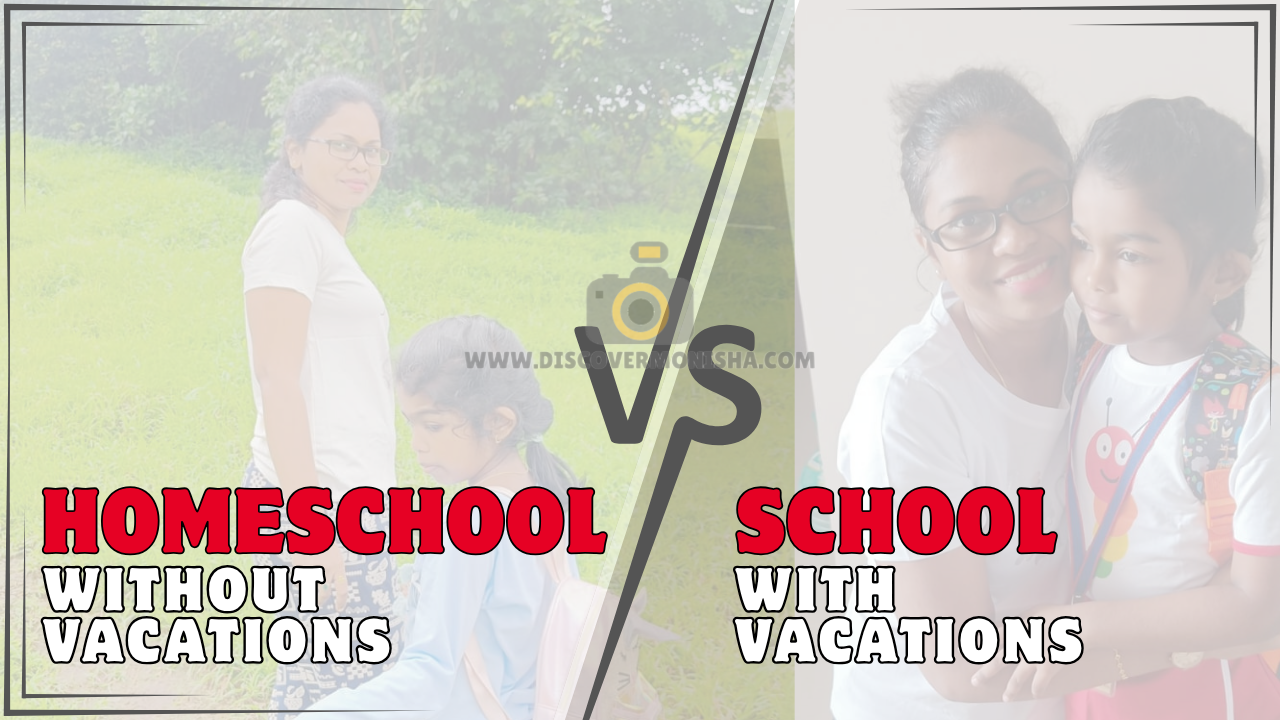
What if the real question isn’t
‘school with vacations vs homeschool without vacations’
But what kind of life rhythm truly helps a child grow?
In a city like Mumbai, education can feel exciting and full of opportunities, yet highly stressful at the same time. With so many breaks throughout the year—summer vacation, Ganesh Utsav holidays, Navratri holidays, Diwali break, Christmas break, short Holi holidays, and more—school life may seem full of welcome pauses. But do these frequent breaks truly work well for pre-primary and primary children, where even a small disruption in routine can create anxiety and unsettle their learning rhythm?
In today’s article, I’m going to share how my daughter’s homeschooling journey works and what it looks like in our daily life.
Traditional schooling often follows a fixed calendar of terms, holidays, and long breaks.
while
homeschooling can flow differently, blending learning into everyday life without waiting for vacations to feel free.
- One model separates study time from leisure time.
- The other can turn the whole year into a balance of curiosity, flexibility, travel, rest, and real-world learning.
This comparison isn’t about which is superior for everyone—
It’s about understanding how each approach shapes a child’s
growth, learning, family time, and sense of freedom.
My daughter is a fast learner with a strong memory and sharp observation skills, which makes teaching her a smooth and enjoyable process. From the time she was a baby, I made sure that learning never felt like stress or hard work but instead became a natural part of our everyday life. Since I introduced her to the English language from a very early age, subjects like grammar and other academics have come easily to her without pressure.
This is one of the greatest benefits of introducing important skills early in life through fun, simple, and engaging methods. Children often absorb so much naturally that later in life they realize they are already equipped with the foundation they need, without ever feeling burdened by the learning process.
Not every day looks the same for me, as I balance many roles—a busy professional, an art enthusiast, a home care and improvement manager (without any extended help), and a homeschooling mother. Because of this, I work with structured time schedules. Along with my own health challenges and my daughter’s medical needs, it becomes essential for me to keep learning easy, flexible, and stress-free while never compromising on quality education.
I truly feel my daughter is fortunate to have her own mother guide her homeschooling journey. With my educational background, I know which chapters are meaningful, which concepts need focus, and which areas can be simplified to avoid unnecessary academic overload. She trusts me completely, and I feel honoured to provide her with the right guidance, support, and a thoughtful approach to her education.
Benefits of Homeschooling Without Waiting for Vacations
1. Learning happens everywhere.
One of the biggest advantages of homeschooling is that education does not stop even while we travel. My daughter learns from the places we explore—whether it is history, culture, nature, geography, or everyday life experiences. Along with that, we also carry academic books wherever we go, so learning can continue naturally in small, stress-free ways.
- We even attend the extracurricular activities on the go through online learning.
- Sometimes we take long breaks altogether out of the blue for many reasons and make up for the lessons we’ve missed later.
- So this is the reality of life, and sometimes going with the flow is worth it. In homeschooling, there are no fixed vacations.
- Breaks happen naturally for various reasons, and we also take part in real-life celebrations from time to time, which helps build a child’s understanding of community, culture, and the world around them.
- Sometimes we do not plan trips in advance; in most cases, they happen spontaneously. The advantage of this is that when the entire state or country is on school break—often the busiest and most stressful time to travel—we can choose quieter and more convenient times instead.
- Family vacations during peak holiday seasons often come with challenges such as crowded destinations, heavy traffic, higher accommodation costs, weather concerns, and managing younger siblings, all of which can make travel more exhausting than relaxing, leaving no room for family time.
2. Academic progress stays on track
I use NCERT books as a reference to ensure that my daughter stays aligned with, or even ahead of, her peers academically. This gives me a clear structure while still allowing the flexibility of homeschooling. It helps maintain quality education without the rigid pressure of a traditional setup.
3. Learning through curiosity and visual engagement
My daughter enjoys books with colorful images and visually engaging content. I have noticed that this naturally sparks her curiosity and attention. Instead of disturbing that interest, I choose resources that support her learning style. When children enjoy what they see, they are more likely to connect with what they learn.
4. Not every child learns well through old traditional methods
Traditional learning methods may work for some children, but they can feel boring and limiting for others. Creative children often thrive when allowed to explore concepts in different ways. With the right guidance, they can learn deeply and confidently without being left behind in any area.
5. Every generation learns differently
As parents, we may first try the methods we grew up with, but times have changed and children are different too. If a child naturally chooses a different learning approach, what they need most is an understanding heart and a brave heart willing to support the path meant for them. Sometimes the best education comes when we stop forcing one road and start helping them build their own.
Drawbacks of Schooling With Vacations and Frequent Breaks
Schooling can certainly help build discipline and routine in children, but that does not mean it works equally well for every child. Some children can learn the same values of discipline, responsibility, and manners in a calmer, less stressful environment. Childhood is also a phase of growth, energy, emotions, and natural unpredictability. Even if children are taught discipline at this age, there is no guarantee they will perfectly follow every rule all the time—and that is normal. Burnout, resistance, and emotional ups and downs are also common parts of growing up and they are real for kids too.
1. Frequent breaks can disrupt learning momentum
One challenge with traditional schooling is the cycle of holidays, sudden closures due to weather, and repeated interruptions. These breaks can disturb a child’s rhythm and focus, especially for children who benefit from continuity and steady progress.
2. Absence due to emergencies becomes stressful
When a child misses school because of illness, recovery, or family emergencies, catching up can become overwhelming. In many schools, missed chapters and notes must be completed only after returning to class, which adds pressure on children who may still be recovering from health and trying their best to adjust back into routine. Sometimes, simply allowing work to be completed calmly at home could reduce unnecessary stress.
3. Child readiness and school pace may not match
There are times when the child feels ready to learn, but school is on break. At other times, when school is in full academic speed, the child may be low on energy due to health, growth phases, or personal circumstances. This mismatch can create frustration for both children and parents.
4. Extra challenges for working parents
For families where both parents work, and where there is no support from grandparents, nannies, or house help, managing school schedules, leaves, transport, homework, and unexpected closures can become mentally exhausting. It requires constant juggling and planning.
5. Double learning load
Many children attend school during the day and then go for extra coaching classes to relearn the same subjects elsewhere. This increases fatigue, reduces free play time and exploring likes and interests, and adds a financial burden on families. Children need space to breathe, play, imagine, and simply be children too.
6. Early years matter deeply
The first five years of life are especially important in a child’s growth and learning, with the earliest 3 years being crucial for brain development and curiosity for learning. During this stage, joyful and consistent learning experiences often matter more than rigid academic pressure. Learning is not a job for a stipulated time; it is a lifelong task, and one must develop their skills in keeping calm for any type of learning.
7. Cost vs value balance
Parents continue paying fees through holidays and breaks, while actual classroom time may reduce due to interruptions. In contrast, home-based learning can often provide flexibility, focused education, and lower costs. For example, the yearly expense for books and learning materials for my daughter is less than 3k, even when choosing multiple resources from different publishers. while you will pay not less than 3 lac (annually) for this at some schools with good infrastructure. For some families, traditional schooling works beautifully. But for others, a more flexible and child-centered learning model can offer greater balance, consistency, and peace of mind.
“It has never been about the money for us,
it has always been about the worth behind spending the money”To read more insights about our homeschool journey, please find the link below:-
- What led us to homeschool | Part 1
- Essential Tips for New Homeschooling Parents | 2025 Indian Homeschooling | Part 2
- Common myths of Homeschooling cracked | Indian Homeschooling 2025 | Part 3
- Drawbacks in Traditional schooling | Which Educational board? | part 4
- Resource awareness for homeschooling parent | Part 5
- NIOS vs SCHOOL | A tough choice for homeschoolers | Part 6