Heart Health Through Food & Lifestyle | Inside Out

How to Take Care of Your Heart Health Physically and Mentally
Heart Health Through Food & Lifestyle | Inside Out
Introduction
Heart health is often connected only with physical conditions such as cholesterol levels, blood pressure, or heart disease. However, true heart care goes beyond medical reports. Our daily lifestyle, emotional well-being, eating habits, stress levels, sleep quality, and physical activity all play an important role in maintaining a healthy heart.
In today’s fast-paced world, many people unknowingly ignore simple habits that could support both physical and mental wellness. From the food we eat to the way we manage stress and emotions, small daily choices can make a big difference over time.
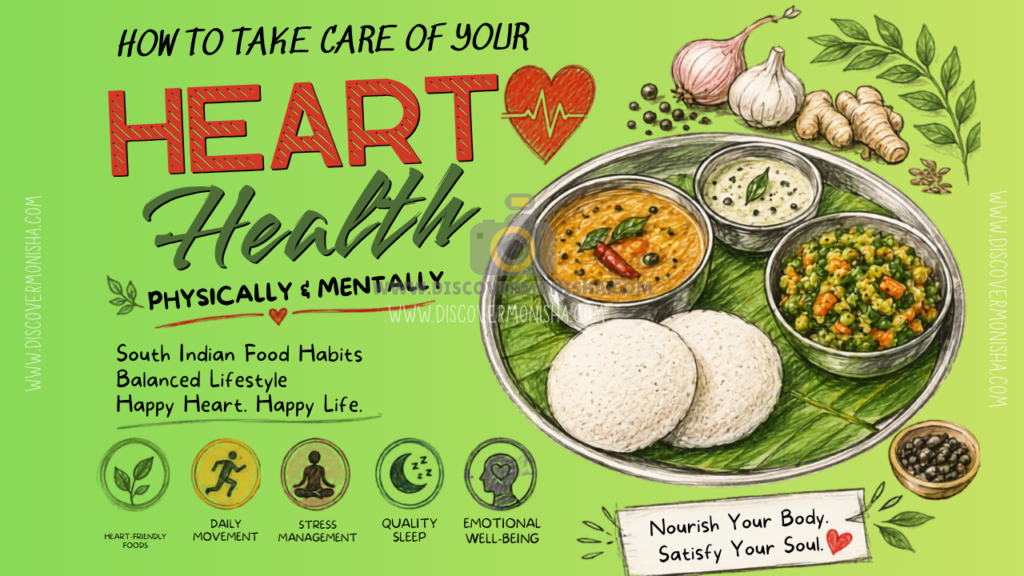
Being a South Indian, many of the foods that are part of my everyday lifestyle naturally include ingredients such as shallots, pepper, cumin, turmeric, ginger, garlic, lentils, and freshly cooked vegetables that are not overly cooked so they retain much of their nutritional value. Fermented foods like idli and dosa, along with simple homemade chapati-sabzi meals, have always been a part of our regular eating habits and can support better overall heart health when prepared in a balanced way.
On my website, I often share lifestyle content related to food, travel experiences, homemade recipes, and balanced living. Even traditional South Indian meals that I regularly feature can naturally support heart health when prepared mindfully with fresh ingredients, vegetables, millets, coconut in moderation, fermented foods, and home-style cooking methods.
Apart from food, daily lifestyle habits also matter. Managing household chores ourselves instead of remaining physically stagnant throughout the day can unknowingly become a form of regular movement and exercise. While not depending entirely on maids may sometimes feel mentally stressful, simple household activities can still help keep the body active. At the same time, using smart appliances wisely may reduce unnecessary strain and pressure on joints while making daily work more manageable.
At the end of the day, heart care is not built only through strict diets or temporary fitness trends, but through consistent everyday habits that nourish both the body and the mind.
This article shares some practical ways to take care of your heart physically and mentally through everyday lifestyle habits.
1. Choose Homemade and Balanced Meals
One of the simplest ways to support heart health is through fresh home-cooked food. Traditional homemade meals often contain fewer preservatives and less processed ingredients compared to packaged foods.
Many South Indian dishes naturally include heart-friendly ingredients such as lentils, curry leaves, vegetables, fermented batters, millets, coconut, garlic, turmeric, and spices used in moderation.
For example, meals like idli with sambar, vegetable upma, millet-based foods, rasam, red rice, ragi-based dishes, and lightly cooked vegetable curries can provide fiber, protein, and important nutrients while still being comforting and satisfying.
On my website, I enjoy sharing homemade recipes and traditional food experiences because balanced eating does not always need to feel restrictive. Healthy food can still be flavorful, nostalgic, and deeply connected to culture.
At the end of the day, we work hard to nourish not just our bodies, but also our souls. Food should therefore bring comfort, satisfaction, and happiness without compromising on quality or balance. A wholesome meal made with care can uplift both the mind and the heart. After all, a happy heart often leads to a happier life.
How can we have balanced meals?
(A) Vegetables that Support Heart Health
Including a variety of colorful vegetables in daily meals helps provide important vitamins, minerals, antioxidants, and fiber.
Some beneficial vegetables include:
- Spinach
- Drumstick leaves (can be consumed as green tea also using dried moringa leaves)
- Carrots
- Beetroot
- Tomatoes
- Pumpkin
- Sweet potatoes
- Broccoli
- Cabbage
- Bottle gourd
- Bitter gourd
- Beans
- Cucumbers
- Onions
- Garlic
Leafy greens and fiber-rich vegetables may help support better cholesterol levels and overall heart wellness.
(B) Fruits That May Benefit the Heart
Fresh fruits naturally contain vitamins, antioxidants, hydration, and fiber that support overall health.
Some heart-friendly fruits include:
- Pomegranate
- Apples
- Oranges
- Papaya
- Watermelon
- Bananas
- Guava
- Berries
- Grapes
- Avocados
- Mangoes in moderation
Seasonal fruits are often one of the simplest ways to include healthier choices in the diet.
(C) Healthy Protein Sources
Protein is important for maintaining strength and body function.
Some balanced protein options include:
- Lentils
- Moong dal
- Chana
- Rajma
- Sprouts
- Curd
- Paneer in moderation
- Eggs
- Fish
- Nuts and seeds
Traditional South Indian meals often naturally include lentils, fermented foods, and plant-based proteins that support balanced nutrition.
(D) Healthy Grains and Fiber-Rich Foods
Whole grains and fiber-rich foods help keep meals filling and nutritious.
Some good options include:
- Red rice
- Brown rice
- Millets
- Ragi
- Oats
- Whole wheat
- Idli and dosa made from fermented batter
Fiber-rich meals may help support digestion and overall heart health.
(E) Healthy Fats in Moderation
The body still requires healthy fats, but balance is important.
Some healthier fat sources include:
- Coconut in moderation
- Groundnuts
- Sesame seeds
- Almonds
- Walnuts
- Flaxseeds
- Homemade ghee in moderation
Avoiding excessive processed and deep-fried foods may help maintain better heart health over time.
(F) Hydration and Lifestyle Habits
Along with food, proper hydration and mindful eating habits also matter.
- Drink enough water daily
- Avoid excessive sugary drinks
- Limit overly processed foods
- Reduce excessive salt intake
- Eat freshly prepared meals whenever possible
Balanced eating is not about perfection. It is about creating sustainable food habits that nourish both the body and the mind while still allowing meals to feel comforting and enjoyable.
2. Stay Physically Active Through Daily Lifestyle Habits
Physical activity does not always require intense gym workouts. Simple daily movement can greatly support heart health. A balanced 20-minute workout that suits your body’s needs can often be enough to keep you active and healthy each day. For children as well, simple day-to-day physical activities based on their natural energy levels—such as playing, running, cycling, or outdoor games—can greatly support their physical and mental well-being.
Walking during travel, exploring new places on foot, climbing steps, light stretching, yoga, dancing, or home workouts all help improve circulation and overall fitness.
Even while traveling and creating lifestyle content, I personally notice how active routines, outdoor movement, and spending time in nature positively affect both energy levels and mental calmness.
Consistency matters more than perfection.
3. Manage Mental and Emotional Stress
Mental stress is one of the most overlooked factors affecting heart health.
Overthinking, emotional exhaustion, lack of rest, and constantly living in a rushed state may silently affect both the mind and body. Learning to slow down occasionally is important.
Simple practices such as listening to music, spending time with loved ones, cooking peacefully, traveling, journaling, prayer, meditation, or enjoying quiet moments can help reduce emotional stress.
Lifestyle content is not always just about aesthetics or entertainment. Sometimes even cooking a comforting homemade meal or taking a peaceful short trip can become a form of emotional healing and self-care.
4. Prioritize Proper Sleep and Rest
The body and heart need proper recovery. Poor sleep habits may affect blood pressure, mood, stress levels, and overall wellness.
Maintaining a healthier routine, reducing excessive screen time, and giving the body enough rest can support both physical and mental heart health.
Family, travel, work, and busy schedules should also be balanced with moments of recovery and relaxation.
5. Maintain Emotional Balance and Positive Relationships
Emotional well-being directly influences heart health. Feeling emotionally supported, connected, and mentally peaceful can positively impact overall wellness.
Spending quality time with family, maintaining healthy relationships, sharing meals together, and creating positive memories often contribute to emotional stability and happiness.
Many lifestyle moments we cherish — family meals, festive recipes, weekend travel experiences, and simple conversations — may appear ordinary, yet they often nourish emotional health deeply.
Conclusion
Taking care of the heart is not only about avoiding illness but also about building a balanced lifestyle physically, mentally, and emotionally.
Fresh homemade meals, active routines, emotional peace, proper sleep, mindful travel, and supportive relationships all contribute to long-term heart wellness.
Even the simple lifestyle choices we make every day—from cooking traditional meals to slowing down during stressful moments—can help create a healthier and happier life over time.
A healthy heart is not built through one perfect habit but through small consistent choices made with care.
Also have a deeper look at our South Indian meal course and its benefits:
- Click here to read about the health benefits of South Indian food.
- Click here to read about my time management as an architect managing my blog, home & lifestyle, and my daughter—her homeschool & my husband.
- In case you are curious to know about her homeschooling days, then click here.