
Tips for Pre-schoolers | Early childhood development
An easy way to raise confident and Independent toddler.

Toddlers are Nature’s Most Treasured Beauty
They’ll Either Make Us Wonder, ‘Oh, Wow,’ or They Can Make You Go, ‘Oh, God.’
In a way, both make you feel so alive and give you your purpose in life on earth. One such responsibility is nurturing your child with moral values and important lessons to live a happy and peaceful life. Being happy and staying positive are things that have to be taught right from childhood. One can find it extremely difficult to adapt to this attitude if they have come across it only later in life.
Feeling confident and expressing yourself with confidence is one of the greatest weapons to lead a blessed life. A confident child will lead a confident life, thereby making her/his presence more meaningful wherever they go.
Mother and father play equal roles in bringing up a child. But God has given certain extra responsibilities to a mother. As they say, the first five years of a toddler’s life are very crucial for their growth and development, both mentally and physically. It becomes of utmost importance that you teach as many basic life lessons as possible throughout this period.
One may wonder who trains kids surviving on the streets or kids living without a parent in the first place. But if that is someone’s outlook, then one should also remember that—
A tree whose roots are well-spread and well-nourished will
neither fall nor be easily uprooted.
There is no thumb rule for how you can make a toddler understand a specific thing. It depends on the person and the situation. A way of teaching won’t be the same for a toddler with a hearing disability as compared to a child without one, but the ability to understand can be present in both. This is where a mother’s role becomes particularly crucial in guiding and training them when necessary. After a brief case study, I have listed a few techniques that have worked well for children and made it easier for parents to explain things to them.
How much can a single teacher teach your growing and energetic child? As such, I feel it is much better to prepare your child at home during the preschool years before they enter the challenging world of society.
1. Introducing Table Manners to Your Kids at an Early Age Helps Them Understand Discipline and Supports Good Eating Habits.
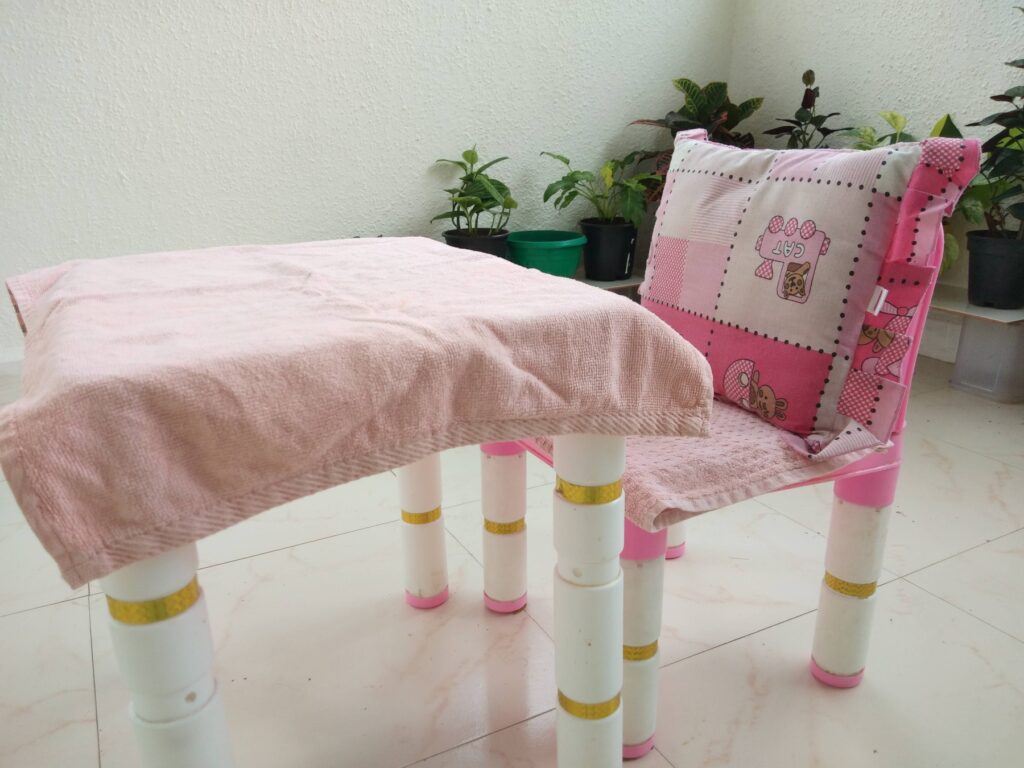
Table manners can be seen in many different aspects of a child’s daily life. Teaching them in a way that is easy for children to understand and follow is very important. Developing a table-and-chair habit from childhood can bring a sense of discipline and routine. It can be useful while having food, painting, watching a tablet, reading books, making block models, and doing many other activities.
You can introduce them to a high chair and gradually move them to a table and chair made from different materials.
For example, a 2-year-old can start using a table and chair made of high-quality, durable plastic, while a 4-year-old can gradually move to a wooden table and chair or something similar. Younger children may not yet be able to handle furniture carefully on their own, so choosing lightweight, age-appropriate furniture can reduce the risk of injury if it moves or tips over. As children become familiar with using a table and chair, they also gradually become more careful with their movements.
Choosing furniture with the right height and proportions is also important for comfort and good posture.
Here are a few things you can start introducing to your child around the age of 2, or once they are sitting and walking steadily. My daughter started using a table and chair when she was 16 months old.
- Initially, teach them to always use a spoon while eating.
- While serving food, remind them: “Don’t take big bites. Take small bites,” or “Don’t stuff too much food into your mouth,” as this can increase the risk of choking.
- Teach them to always use a book or drawing sheet while colouring. This habit can help prevent scribbling on walls while also encouraging them to keep their creative activities within a designated space.
2. Training them with eating and drinking habits.
-
1. Making a Mess While Eating Is Also a Process of Learning
One of the most important things is teaching your child how to eat independently and develop healthy eating habits. It is often said that eating with your own hands can make a meal feel more satisfying, especially in cultures where eating by hand is part of the tradition. Children at a very young age may not know how to feed themselves, but you can introduce it gradually.
Start with finger foods, then introduce spoon-feeding, and eventually offer foods that they can handle more independently, such as idli that they can pick up and dip into chutney.
Letting children explore food can get messy, but it is also part of learning. Make sure the food is age-appropriate, supervise them closely and take necessary precautions while they are eating.
2. Sit Next to Your Child While They Are Having Food
It is always a good idea to sit with your child while they are eating, especially when they are young. You can talk to them about the food, ask them how it tastes and introduce them to different healthy foods.
Try offering a variety of foods during their early years and allow them to discover which flavours and textures they enjoy. This can make mealtimes easier rather than constantly forcing children to eat foods chosen only by the parents.
3. Let Your Child Feed Themselves
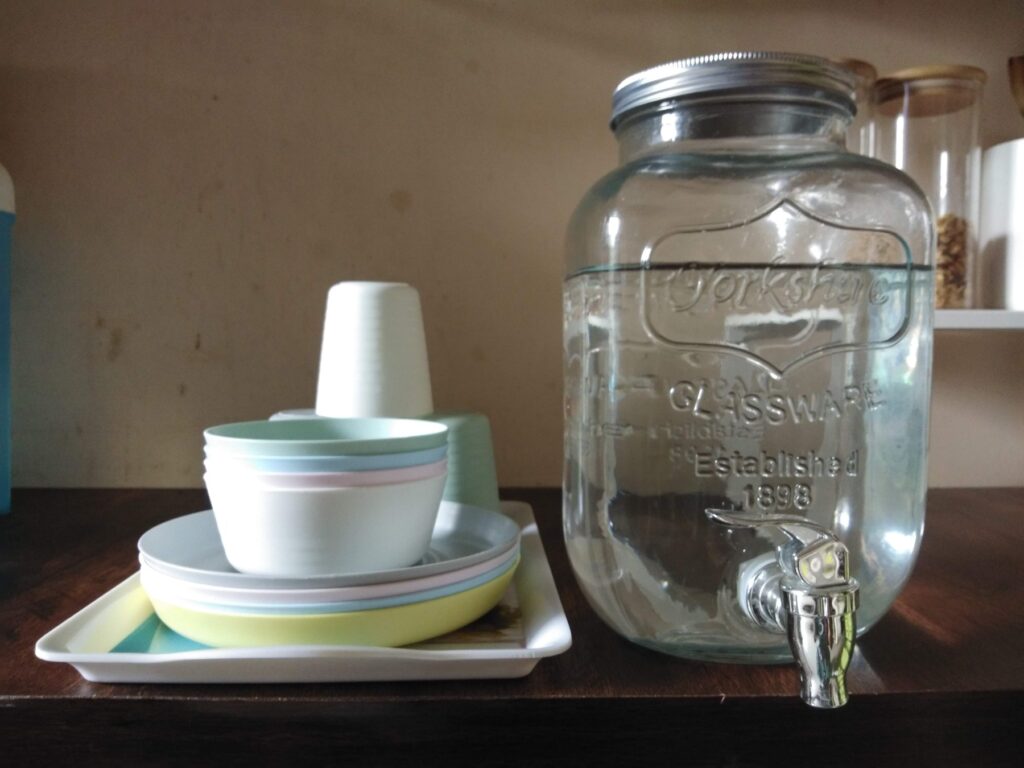
Similarly, encouraging children to get water for themselves can help them become more independent. Keep a small, safe water bottle or cup within their reach so they can learn to drink water when they are thirsty.
You can also keep some bowls, plates, spoons and glasses within their reach, provided they are safe and appropriate for their age. Arranging these things attractively can even encourage their curiosity and interest in using them.
Check out my vlog on how I created a small setup for my daughter.
It is also important to make sure young children have regular access to fluids. Not drinking enough can lead to dehydration, which may cause problems such as dry mouth, darker or concentrated urine and constipation.
4. Offer New Foods
Explain the difference between everyday food, healthy food, snacks and occasional treats. For example:
- Tell your child, “It’s healthy food time now,” when it is breakfast, lunch or dinner.
- You can say, “It’s munchie time; let’s have some cookies,” when offering an occasional snack.
- When you want to encourage a particular habit, you can appreciate their effort with an occasional treat by saying, “Good job, baby. You deserve a treat.”
These simple conversations can gradually help children understand that different foods can have different places in their daily routine.
5. Eating Food on Time
Young children may not understand the concept of time until they begin learning about clocks, but they can understand routines through familiar cues.
For example, you can explain that when the sky becomes dark, it is nighttime and it is time to stop having treats and get ready for bed. You can make these explanations simple and relatable to them.
Maintaining a fairly regular meal routine can also help children understand when it is time to eat and when it is time to stop.
6. Keep Mealtimes Calm
At times, it may be tempting to give a TV, tablet or computer to a child while they are eating, especially during snack time or while having milk before bedtime. But I would avoid making screen-based eating a regular habit.
Mealtimes can be an opportunity to sit together, talk, explore food and develop healthy eating habits. Keeping the environment calm and relaxed can make the experience much more enjoyable for both the child and the parent.
3. Teaching dress-conscious discipline to kids at a very early age.
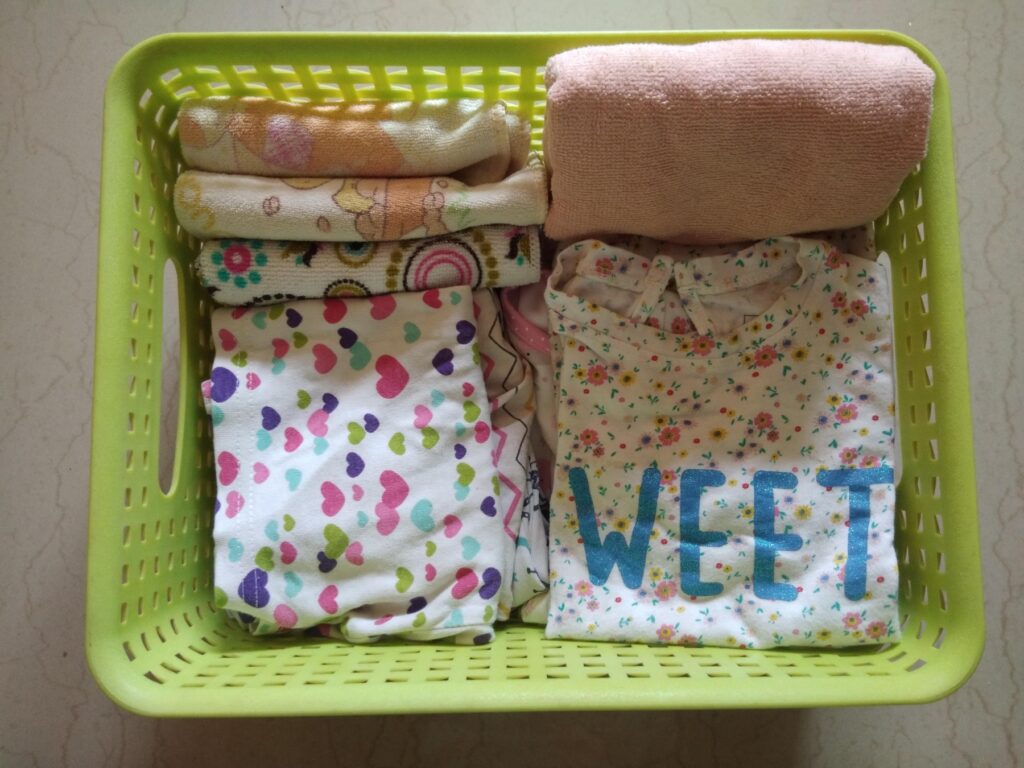
Teaching Body Awareness and Personal-Space Boundaries at an Early Age
Whether it is a daughter or a son, I feel it is important to introduce children to body awareness, personal boundaries and appropriate dressing from a young age, as soon as they are able to understand. It may not seem like a major topic, but in today’s world, I believe it is something parents should not overlook.
2. Teaching Children About Privacy and Their Bodies
Young children may not understand privacy or boundaries in the same way adults do. I started introducing my daughter to these ideas from a very young age.
Rather than teaching children that their bodies are something to be ashamed of, I believe they should understand that their bodies belong to them and that certain parts are private. They should know that they can say no to unwanted touch and that they can always tell a trusted parent if something makes them uncomfortable.
For example, when my daughter was around a year old, she would sometimes wet her clothes. I would gently teach her that she should not remove her clothes in front of everyone and that she could come to me if she needed help. Over time, she understood the idea and would either come to me or find a private place when she needed to change.
3. Teaching Children About Strangers and Trusted Adults
You can gradually explain to children that not everyone they meet is automatically safe or trustworthy. Instead of simply teaching them not to talk to strangers, it is more useful to help them understand safe and unsafe situations and identify trusted adults they can approach for help.
You can use age-appropriate cartoons, stories or role-play to show them how to respond in different situations. You can also help them understand family relationships and who they can approach when they need help.
Most importantly, listen to your child’s behaviour and feelings. If your child feels uncomfortable around someone, don’t force them to hug, sit with or interact with that person just because you expect them to. Children should know that they can maintain personal boundaries.
I also believe children should be taught the correct names for their body parts, including their private parts. There is no need to create secret names for them. Using clear and age-appropriate language can make it easier for a child to communicate if something ever feels wrong.
Whether it is the mother or father, children should feel comfortable talking about anything that concerns them—even something that may seem awkward, embarrassing or insignificant to an adult.
ADDRESS EVERY CONCERN YOUR CHILD HAS. EVEN WHAT SEEMS LIKE A SMALL ISSUE DESERVES TO BE HEARD, BECAUSE A CHILD WHO KNOWS THEY WILL BE LISTENED TO IS MORE LIKELY TO SPEAK UP WHEN SOMETHING REALLY MATTERS.
4. Teaching them about how to care.
- Love your child like there is never enough love.
- Give them affection and attention while they are little.
- Care for them as though there is no tomorrow.
Although whatever you do, society will always have something to say. Leave your child for more than an hour, and people may say you don’t spend enough time with them. Stay by their side, and they may say you are too attached. Always trust your instincts. Every family, child and situation is different, so other people’s judgments don’t always apply to your circumstances.
Never stop caring for your child simply because of society’s opinions. Always remember that you are your child’s first role model. Be confident in what you do and teach them the values you want them to carry through life.
1. Emotional Caring
You can ask your child to water the flowering plants. They may not understand the importance of caring for another living thing immediately, so show them the blooming flowers and explain: “If we water the plants regularly, they will grow well and give us beautiful flowers.”
This is a very simple way of introducing the idea of care, patience and nurturing, and children can gradually pick it up through everyday experiences.
2. Physical Caring
You can also involve them in small acts of caring. For example, ask them to put some lotion on your hand and say, “Thank you, honey. That feels better.” This helps them understand that small actions can make someone else feel cared for.
If you have a pet at home, you can ask them to help feed the pet under your supervision. You can also let them put grains in a bird feeder or help with other age-appropriate activities involving animals and nature.
These simple everyday experiences can help children understand that care is an essential part of our lives.
Self-care and self-respect are equally important for people of every age. While teaching your child to care for others, don’t forget to teach them to care for themselves too. They should understand that they should not intentionally hurt themselves or others and should not accept inappropriate or harmful behaviour from others as well.
Children should also learn that making mistakes is a normal part of life. What matters is recognising the mistake, learning from it and trying not to repeat it—not living in fear of being punished.
THE LOVE AND CARE WE SHOW OUR CHILDREN BECOMES PART OF WHAT THEY LEARN ABOUT CARING FOR THEMSELVES AND OTHERS. THEY ARE QUIETLY LEARNING FROM US WHAT IT TRULY MEANS TO CARE.
5. Teaching Them About Cleanliness
Cleanliness is very important in life, wherever we live. Be it your own room, your play area, your neighborhood or your country, the habit of keeping yourself and your surroundings clean contributes to a healthier and more pleasant life. There is no specific way to teach this topic, but once children understand it, it gradually becomes a habit and eventually becomes part of their personality.
How do we introduce this habit to toddlers, and how early is too early?
Starting With Self-Cleanliness
- The more you do things in front of them or let them join you in everyday chores, the quicker they can pick up the habit. Kids often repeat what they see, and this makes it easier to introduce good habits at an early age.
- You can start with simple habits such as brushing their teeth before bed and after waking up, avoiding putting their fingers inside their nose, and washing their hands after going out and whenever they return home.
- Ask them to wear clean clothes and not to wipe their dirty hands on their clothes. You can also explain to them that they should use the toilet whenever they need to pee or poo.
- Teach them how to keep themselves clean first, and then gradually help them understand how to keep their surroundings clean.
Keeping the Home Clean
- Hand them a cloth while you clean the TV or a desk. Show them what dust looks like and how the surface looks after it has been cleaned. My daughter picked up this habit in no time. Now, whenever she uses something, she makes sure that it is clean.
- Keep child-friendly versions of things they can safely use at home, such as a small broom, mop or watering can. If they come to you asking because they want to help, don’t stop them. Let them try, even if the house becomes a little messier in the process. Encouraging their interest is more important.
- Ask them to put potato peels or cookie wrappers into the trash bin. Don’t throw anything on the floor in front of them. Children may imitate what they see you doing, and you may eventually end up scolding them for a habit they learned by watching you.
- Ask them to always put their toys back in their place. Even if they cannot arrange everything properly, simply ask them to help you. Encourage them to put their storybooks back on the shelf and return other things to their proper places.
Not only toys, but anything they take from around the home should be returned to its place. This is a wonderful habit to develop from an early age. It can gradually help children become more organised and responsible, while also teaching them to take care of the things around them.
Ending With Their Surroundings
- This is something that, when taught right from childhood, can help children become responsible contributors towards a cleaner community. Very simply, start with not littering the road or park when you are outside your home. Ask them to look for a garbage bin to throw away the trash they have used, or keep it in your bag and dispose of it properly when you get home. Also make it clear that they don’t have to collect the mess made by others; they are responsible for their own waste and don’t need to pick up all the litter they see.
- Teach them not to pluck flowers from parks or plants around your home. This helps them understand how to respect plants and nature and gradually develop an awareness of caring for their surroundings.
- Teach your kids about different materials from an early age, such as glass, wood, plastic, metal and paper. Understanding the differences can be useful as they grow. A broken piece of glass, for example, can cause injuries, while improperly discarded plastic can harm the environment.
- Teach your kids about the importance of saving resources. For example, teach them not to leave the water running while brushing their teeth and to turn off lights when they are not needed.
NOTE: A young child may not be able to reach a switchboard, and they should not be allowed to access electrical switches without adult supervision. You can still talk about saving electricity and demonstrate the habit yourself so they gradually understand what it means to conserve resources.
There is a beautiful thought that has always stayed with me:
“Children are like wet cement. Whatever falls on them makes an impression.”
6. Teachings on Moral Values
Parenting is not only about supporting a child’s physical growth. What equally matters is how healthy their mental well-being is. We cannot expect our kids to do something that we haven’t been following ourselves. So, we have to make sure that we practice the same before we preach to our kids, no matter how small or big the issue may be.
The moral values our children learn as kids will affect how they see the world and behave as adults. As parents, it is our duty to teach morals to our children and help transform them into responsible adults in society. Always develop a habit of explaining situations to your kids in a positive way. This will be more beneficial for them in the long run.
Whenever they go out to play or return from school or from their friends’ place, sit down and talk to them. Ask them how their day was and what they did.
We may not be able to monitor them all the time, but we can definitely develop transparency and open communication between them and us. This helps us understand what is going on in their lives, so we can accordingly teach them how to handle different situations in life. A few of the tips that helped me with my daughter are what I am looking forward to sharing with you.
1. Rewards:
Often reward your kid with some treats or toys. For smaller things, they understand. Give them some treats that they enjoy eating. For bigger things, you can reward them with a surprise toy. But let it not become a habit, as either of them can pose a problem for us later.
For example, my daughter used to become a lot crankier when I asked her to brush her teeth before going to bed. What I would do is tell her to have her gummy and then clean her teeth, or else she would get a worm in her tooth. The gummy used to be a vitamin supplement that I would give her before bed, prescribed by her doctor. Since it was a sweet gummy, she thought it was a treat.
2. Internet and Television
Let your kids know that not everything on television and the internet is meant for them. They need to understand what they can see and what they should avoid. These days, we have parental controls on almost everything, but still, making them understand these boundaries becomes very important as they grow up.
Everyone has the right to know what is happening around them. Make sure that whatever you explain to them, you do it politely. Scolding them or strictly warning them may sometimes develop more curiosity in children, so helping them understand why certain content or situations are not appropriate can be more effective.
TEACH YOUR KIDS ABOUT MORAL VALUES INSTEAD OF JUST TEACHING THEM RULES.
7. Children Also Have Their Own Way of Learning
Children also have their own ways of learning, so it is perfectly okay to let them watch TV or use other forms of entertainment for a limited amount of time each day. The key is to maintain a healthy balance and make sure screen time does not replace play, physical activity, reading, social interaction or other forms of learning.

Every child is born with unique talents and abilities. There are a lot of factors that shape their character. The first five years of a child’s life are very crucial. As such, whatever basic teachings we can inculcate in our kids during these years can make a significant difference in their adulthood.
Introduce them to educational videos for a limited amount of time. You can also play stories for them and sit next to them, explaining the stories and their morals even if they don’t fully understand them. They may simply be listening at first, but over time, they may start choosing cartoons and stories that have good lessons.
In the generation of Android and Mac, you can’t completely expect a child to stay away from technology. Looking at other kids, they will naturally feel the urge to use mobile phones and tablets. What we can do is set a reasonable time limit for their use. We can also allow them to use these devices as a reward for doing good things, such as reading a book or putting their toys back in the box. There are a lot of educational apps available depending on the child’s age group. Introducing such apps instead of allowing them to spend all their screen time on meaningless games can, in one way, keep their little minds engaged with age-appropriate activities.
Explain to them how important family love and support are. This can happen only if they see and feel the same from you. Always make sure that, whatever the situation, your child feels comfortable turning to you for help. Let the trust between you and them be as strong as it can be.
Try to avoid heated arguments or serious conflicts in front of young children. Children can pick up on tension at home, even when they don’t fully understand what is happening. Instead of trying to make the family appear happy all the time, what matters most is creating a home where children feel safe, loved and supported. If they are upset or confused by something they witness, give them reassurance and allow them to talk about their feelings.
As Your Child Starts to Sit and Talk With You…
Teaching our kids about adjusting and compromising in situations where it is worthwhile, and training them to develop the habit of waiting patiently, are positive ways to help build confidence and emotional maturity.
Similarly, let your child learn to respect all religions, irrespective of which religion we personally follow. Understanding fairness and justice is also something they should gradually learn in today’s world.
No matter how well we do, there may be people who try to put us down. In such situations, teach your child to trust themselves, understand what is within their control and move forward. No matter how much you justify yourself, some people may choose to understand only what is convenient for them. This is an important life lesson that can be introduced gradually as children grow.
Click here to find out tips on what toys can help in a child’s learn-through-play adventure.
Always remind your child that happiness comes from within and that they should not depend entirely on someone else for their own happiness.

Fab job !! ♥️👏
Thank you
Very informative 🙌
Thank you suraj
OMG… Your hardwork never fails Moni. Keep doing
Thank you ram